Seasons and sky
Frost Date
Direct answer
Frost Date: A Frost Date is a climatological estimate or probability date associated with the first or last occurrence of a stated cold-temperature threshold.
A Frost Date estimates seasonal freeze timing from local climate records.
$0 today, then $12/month after 7 days. Cancel anytime.
At a glance
- Found in
- Seasons & Earth Almanac
- Related
- Cooling Degree Day, Phenology, Astronomical Season, Equinox
A Frost Date estimates seasonal freeze timing from local climate records.
A Sun-Earth orientation for seasonal, atmospheric, tidal, and terrestrial terms.
What does your own chart say about you?
Choose love, work or purpose. Your reading is written from your chart. Your reading uses your own birth details.
Walk through Alex’s whole example first
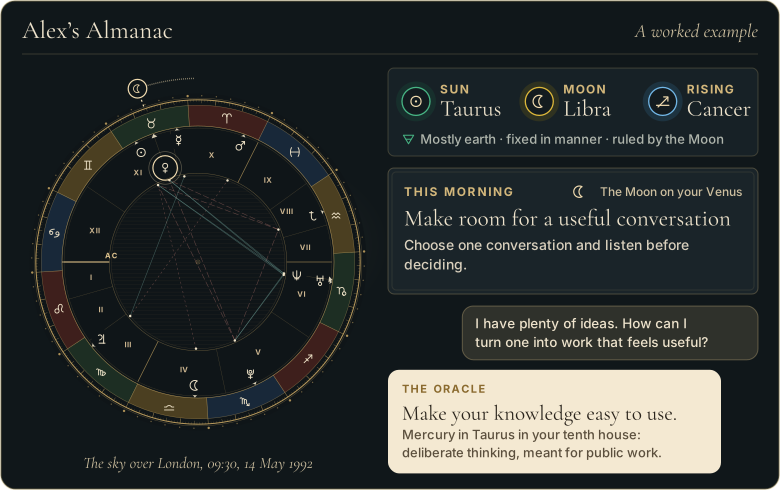
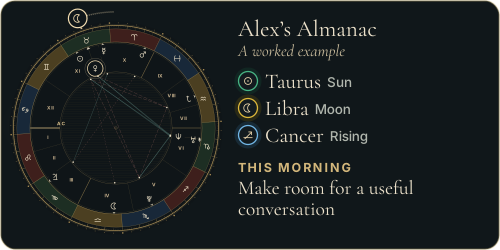
 The Road of AgesSee the turning points of your whole life, from your birth date
See your road's shape
The Road of AgesSee the turning points of your whole life, from your birth date
See your road's shape
Prefer to explore first?
 The Road of AgesThe turning points of your whole life, from your own chart
Walk my road
The Road of AgesThe turning points of your whole life, from your own chart
Walk my road
Free, by email
Your daily Almanac letter
One short letter at 7 each morning: the day’s theme read for your own chart, and one thing to do with it.
The story behind Frost Date
Station records enabled agricultural services to replace folklore dates with probability-based freeze climatology.
Why Frost Date matters
Gardeners and growers need a risk window rather than a guarantee that cold will stop or start on one date.
Frost Date in practice: an example
A published last-spring 32-degree date at 50-percent probability means later freezes remain possible.
Where readings of Frost Date go wrong
It is a mistake to treat a Frost Date as a forecast; follow current National Weather Service frost and freeze products.
Sources and editorial method
Research references used for this entry include:
- NOAA NCEI: U.S. Climate Normals - Official methodology and data for climate normals, degree days, growing seasons, and freeze dates.
- Source
- The Great Almanac Dictionary
- Category
- Seasons & Earth Almanac
- Last updated
- 2026-09-26
Check probability and current forecast
A definition tells you what it is; your own birth chart tells you what it means for you. The Oracle casts your real chart and answers for your love, your work, and your year ahead, in conversation. It opens with the 7-day Seeker trial.
Speak with the OracleRelated terms
More in Seasons & Earth Almanac
- June Solstice
- Nautical Dusk
- Polar Night
- Solar Terminator
- Tidal Bore
- Astronomical Dawn
- Civil Dawn
- December Solstice
From the reference page to your own chart
Every word here
is in your own chart.
- A personal reading about love, work or purpose, written from your chart
- A practical next step to consider
- It opens with 7 days free, with the AI Oracle and daily guidance
$0 today, then $12/month after 7 days. Cancel anytime.
Common questions
What is a Frost Date?
A Frost Date is a climatological estimate or probability date associated with the first or last occurrence of a stated cold-temperature threshold.
What do people get wrong about a Frost Date?
It is a mistake to treat a Frost Date as a forecast; follow current National Weather Service frost and freeze products.
Free, by email
The Almanac, in your inbox at 7
One short letter at 7 each morning: the day’s theme read for your own chart, and one thing to do with it.