Calendars and time
Civil Calendar
Direct answer
Civil Calendar: A Civil Calendar is the calendar adopted by a government or society for legal dates, administration, commerce, and public life.
A Civil Calendar supplies the official dates used in everyday public affairs.
$0 today, then $12/month after 7 days. Cancel anytime.
At a glance
- Found in
- Calendars & Timekeeping
- Related
- Calendar Year, Proleptic Gregorian Calendar, Calendar, Julian Date
A Civil Calendar supplies the official dates used in everyday public affairs.
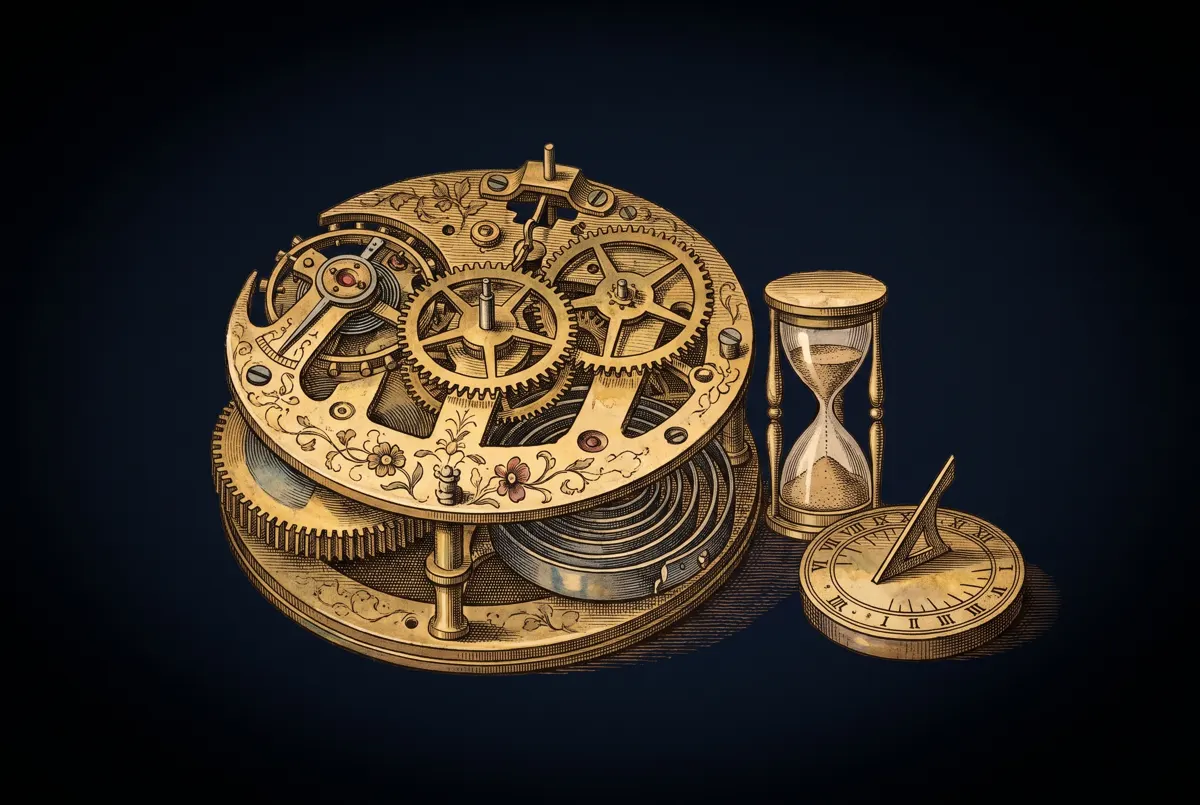
A cycle or timeline schematic for comparing the named timekeeping concept.
What does your own chart say about you?
Choose love, work or purpose. Your reading is written from your chart. Your reading uses your own birth details.
Walk through Alex’s whole example first
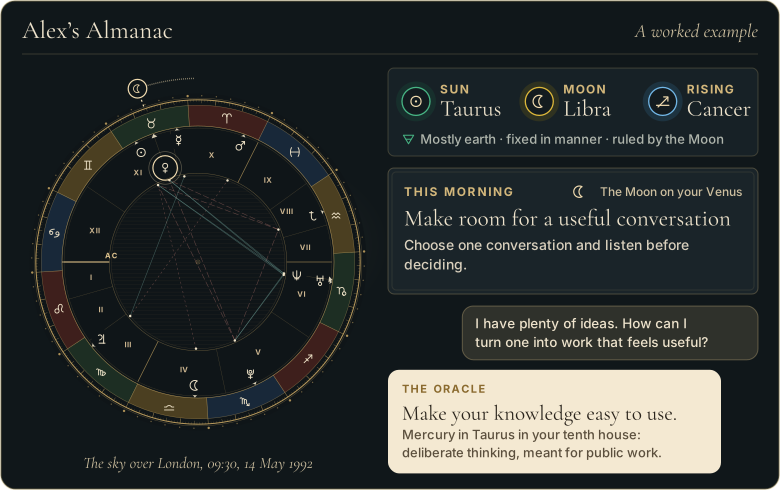
 The Road of AgesSee the turning points of your whole life, from your birth date
See your road's shape
The Road of AgesSee the turning points of your whole life, from your birth date
See your road's shape
Prefer to explore first?
 The Road of AgesThe turning points of your whole life, from your own chart
Walk my road
The Road of AgesThe turning points of your whole life, from your own chart
Walk my road
Free, by email
Your daily Almanac letter
One short letter at 7 each morning: the day’s theme read for your own chart, and one thing to do with it.
The story behind Civil Calendar
Many states eventually adopted the Gregorian calendar for civil purposes while communities continued using other calendars for religious observance.
Why Civil Calendar matters
Civil Calendar clarifies why an official date can differ from a religious, agricultural, regnal, or astronomical date label.
How to read Civil Calendar
Civil Calendar comes up when interpreting laws, records, contracts, holidays, historical documents, and cross-border date conversions.
Civil Calendar in practice: an example
A country may use Gregorian dates on passports while also publishing holidays from a lunar or lunisolar religious calendar.
Where readings of Civil Calendar go wrong
A common error is to assume the current civil calendar was used throughout a country's entire history or adopted everywhere at once.
Sources and editorial method
Research references used for this entry include:
- U.S. Naval Observatory: Introduction to Calendars - Official overview of calendar systems, leap rules, eras, and historical calendar reform.
- ISO: ISO 8601 Date and Time Format - Standards-body overview of unambiguous international date and time representations.
- Source
- The Great Almanac Dictionary
- Category
- Calendars & Timekeeping
- Last updated
- 2026-09-26
Identify the official date system
A definition tells you what it is; your own birth chart tells you what it means for you. The Oracle casts your real chart and answers for your love, your work, and your year ahead, in conversation. It opens with the 7-day Seeker trial.
Speak with the OracleRelated terms
More in Calendars & Timekeeping
- Draconic Year
- Golden Number
- International Atomic Time
- Local Mean Solar Time
- Solar Calendar
- UT1
- Astronomical Year Numbering
From the reference page to your own chart
Every word here
is in your own chart.
- A personal reading about love, work or purpose, written from your chart
- A practical next step to consider
- It opens with 7 days free, with the AI Oracle and daily guidance
$0 today, then $12/month after 7 days. Cancel anytime.
Common questions
What is a Civil Calendar?
A Civil Calendar is the calendar adopted by a government or society for legal dates, administration, commerce, and public life.
What do people get wrong about a Civil Calendar?
A common error is to assume the current civil calendar was used throughout a country's entire history or adopted everywhere at once.
Free, by email
The Almanac, in your inbox at 7
One short letter at 7 each morning: the day’s theme read for your own chart, and one thing to do with it.