
Cancer and Capricorn FriendshipStaying Close Through Life
A friendship can be loyal without being effortless. The real question is whether you both know how to show up when your lives move at different speeds.
Get my free love reading Or read your own two charts together
Direct answer
Short version
Cancer and Capricorn friendship is traditionally associated with emotional loyalty meeting dependable support. It can work especially well when you appreciate different ways of showing care, agree on a realistic rhythm of contact, and avoid making one person responsible for maintaining the entire friendship.

Understand your own relationship patterns.
Explore what you need in love and a next step for your situation. Your reading uses your own birth details.
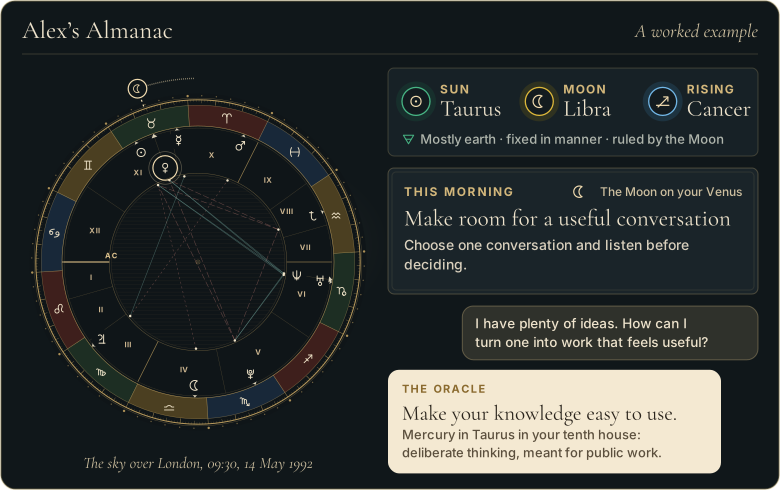
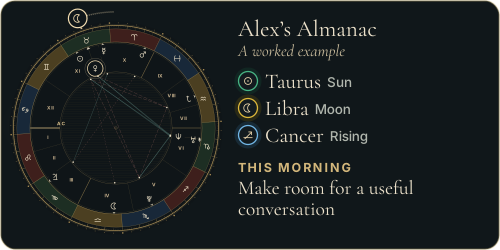
Walk through Alex’s whole example first
 The Road of AgesSee the turning points of your whole life, from your birth date
Free first look
The Road of AgesSee the turning points of your whole life, from your birth date
Free first look
Prefer to explore first?
 The Road of AgesThe turning points of your whole life, from your own chart
Walk my road
The Road of AgesThe turning points of your whole life, from your own chart
Walk my road
What makes the friendship feel good
In this pairing’s symbolic story, one friend makes a place feel like home while the other helps an idea become a plan. You might enjoy familiar rituals, working toward a shared goal, or spending time together without needing to entertain each other constantly.
Look for evidence of reciprocity in different forms. The friend who rarely sends long messages may remember your interview and help you prepare. The friend who is less organized may notice when you are not yourself. Different contributions can be valuable when both people feel seen.
Choose a shared ritual you can actually sustain: a monthly meal, a regular walk, or a brief call after a demanding week. The point is to remove the repeated uncertainty of wondering who should reach out next.
A one-minute story
The Road of the Sun
Where the twelve signs came from, and why they carry the names they do.

“If I don’t message first, we never talk”
Before deciding the friendship means more to you, ask what is happening. A busy season, different messaging habits, and declining interest can look similar from a distance. Astrology cannot tell you which explanation is true.
Try: “I like spending time with you, but I’ve been initiating every plan lately. Would you choose the next one?” This gives your friend something clear to respond to without asking them to defend their whole character.
Then allow their response to count. If they suggest a time and follow through, you have useful information. If they repeatedly avoid the request, you can reduce your effort without making either sign the villain. Friendship should have room for your needs too.
Help that feels helpful, rather than intrusive
Suppose a friend tells you they were turned down for a role. You offer a revised résumé; they wanted someone to acknowledge the disappointment. Or you offer sympathy while they urgently need practical help. The mismatch is easy to fix if you ask first.
Use: “Do you want me to listen, help you think it through, or do something practical?” The answer can change from day to day. Do not assign one friend the permanent role of problem-solver and the other the permanent role of emotional support.
When you cannot help, make the limit clear and kind: “I can listen for fifteen minutes tonight, but I cannot take on the application.” Honest limits are more dependable than generous promises you later resent.
Keep loyalty from becoming obligation
Long friendships carry shared memories, but history does not give either person unlimited access to the other’s time. A friend can care about you and still have other relationships, work commitments, or a need for privacy.
If you lend money, share a project, or become housemates, discuss expectations explicitly. Warmth does not replace an agreement about repayment, deadlines, or chores. Keep those conversations separate from whether you value each other.
- Ask before sharing a friend’s private news, even with mutual friends.
- Make declining an invitation possible without a loyalty test.
- Address one broken agreement directly instead of collecting silent grievances.
How to reconnect after a quiet stretch

Send a low-pressure invitation with a real option: “I miss our walks. Would Saturday morning work?” This is easier to answer than “We should catch up sometime,” and warmer than opening with an accusation.
If there is unresolved hurt, name it before pretending everything is normal: “I’d like to reconnect, and I also want to talk about what happened last time.” Repair does not require an elaborate explanation of your signs. It needs enough honesty to make the next meeting feel safe and mutual.
For this week, choose one friend you want to invest in and make one clear invitation. Notice whether you leave the interaction feeling connected, obliged, or depleted. That observation is more useful than assuming loyalty must look the same forever.
Sources and editorial method
Research and editorial references used for this page include:
- Astrology.com: Cancer and Capricorn compatibility - Reference for the traditional opposition, water–earth pairing, and Moon–Saturn symbolism; not evidence of predicted relationship success.
The sign symbolism comes from the astrological tradition described in the linked reference. The conversations and exercises are our editorial suggestions, not findings from relationship research or a personal chart reading. Use what fits your actual experience; a Sun sign cannot establish someone’s intentions or predict a relationship outcome.
Related reading
From the reference page to your own chart
Every word here
is in your own chart.
- Your chart and numbers, read for you in about a minute
- Ask the Oracle anything about them
- Every personal tool and daily guidance
Free reading, no card needed. Optional membership: payment details required, 7 days free, then $12/month. Cancel before it renews and you pay nothing.
Common questions
Can Cancer and Capricorn be best friends?
Yes. Their traditional themes of care and dependability can complement each other. Being best friends still depends on mutual interest, trust, time, and how you handle changing needs.
Does a quiet Capricorn friend mean they do not care?
You cannot infer that from their sign or silence alone. Ask about their availability and look at whether they make an effort and keep agreements over time.
Can this friendship become romantic?
It can, but friendship and shared signs do not establish attraction. Ask respectfully, leave room for a no, and discuss whether either person wants the relationship to change.